
Ne Zha vs. The World
How Ne Zha, a Chinese mythical demon child, is taking over the world.

Ne Zha, a Chinese mythical demon child, is taking over the world.
Ne Zha 2, released in early February of 2025, surpassed $2 billion at the box office within a couple weeks. When I first began chipping away at this essay in early March, I wrote that Ne Zha 2 was “inching dangerously close to records set by iconic franchise films such as Avengers: Infinity War ($2.05 billion) and Star Wars: Episode VII - The Force Awakens ($2.07 billion).” Now a month later, Ne Zha 2’s box office is long past those numbers with its next milestone being James Cameron’s Titanic ($2.26 billion).
So what is the hype all about?
There are troves of articles admiring Ne Zha 2’s commercial success (see Variety, New York Times), so I won’t belabor it further. From the perspective of a Chinese/American person, I’d like to talk about why I think this film resonated so well with Chinese audiences.
P.S. There is so much nuance and history behind the success of this film that I cannot capture without doing a full-fledged research paper, but I hope my high-level overview is informative.
The Eyeball Era Fatigue
In China, Chinese New Year is one of the prime times for blockbuster films to compete for audience attention. After the pandemic, high-budget films are more risk averse than ever. Why release the film on any weekend other than the Chinese New Year break, when people are at home with their families, seeking and expecting star-studded entertainment that appeals to all generations? Any franchise film could leverage this time frame to shoot for the stars.
Since Chinese New Year invites a publicized, real-time box office war, all films released during this time must be of the highest caliber…right?
Unfortunately, high quality films are rarities, and the audience knows it, too. Over the past decade, the Chinese movie industry has entered 流量时代 (líu liàng shí dài), roughly translated to “the eyeball era” (by me). Producers and directors are more likely to cast influential actors who can boost “the stats.” A-list idols and celebrities who can only muster two facial expressions but millions of views are lucrative investments at the cost of art. Crazed fans mobilize to buy out theaters and pre-order tickets to guarantee that their bias can break records and show other idols and fanbases that “they ain’t sh**.”
Among this year’s slate of franchise films with dull storylines and unconvincing actors, Ne Zha 2 emerges as a breath of fresh air. Though still a franchise based on a mythical character known by every Chinese person, Ne Zha 2 did not cast any traditional star power. The voice actors are true professionals with respect for and dedication to their craft instead of celebrities looking for a quick buck. The film, five years in the making, wows audiences with genuine art—jaw-dropping animation, compelling storyline, and lovable characters. Who knew that a quality film can trump misused celebrity?
“Just Be Yourself” - Distinctly Chinese
One of the film’s main messages is self-acceptance, and in a way, that is exactly what the film itself did, too. The film is unapologetically Chinese, full of both contemporary and historical references that resonate with Chinese audiences. Without attempting to pander to a global audience, the film’s self-assured identity contributed to its success.


Beyond the low-hanging fruit of pop culture references (see the recreation of the popular groundhog meme above), almost every visual element contains historical references (see this Bilibili video—even if you don’t understand Mandarin, you can visually see the inspiration behind each creative choice).
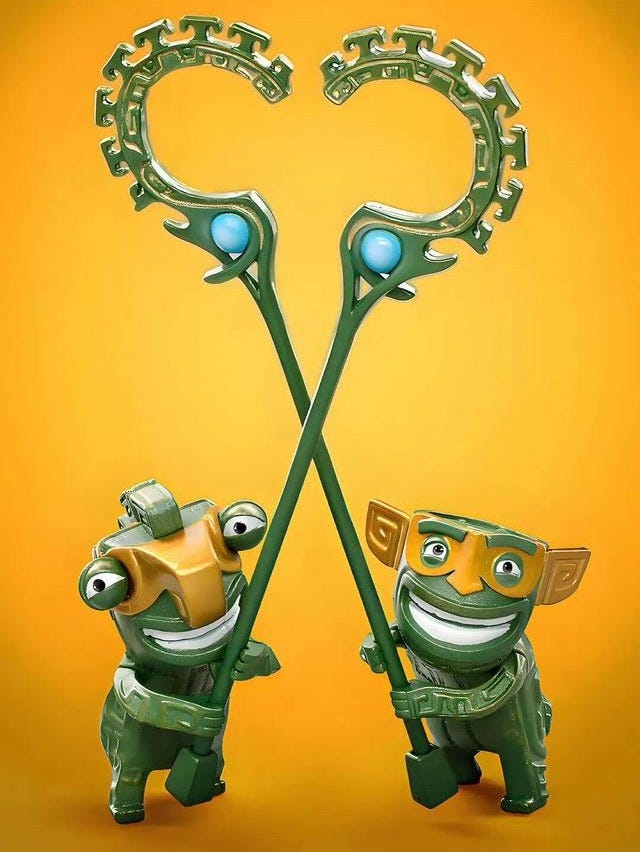
结界兽 (jié jiè shòu), one of my favorite comedic duos from the film, are inspired by bronze masks uncovered from an archaeological site in Sichuan, China. The film turned a piece of thousands-year old copper into dynamic characters that make people laugh today. As a layman audience member like myself, you might not be able to pinpoint the source or corresponding dynasty of a specific visual choice, but the “Chinese-ness” is certainly something that you can feel.
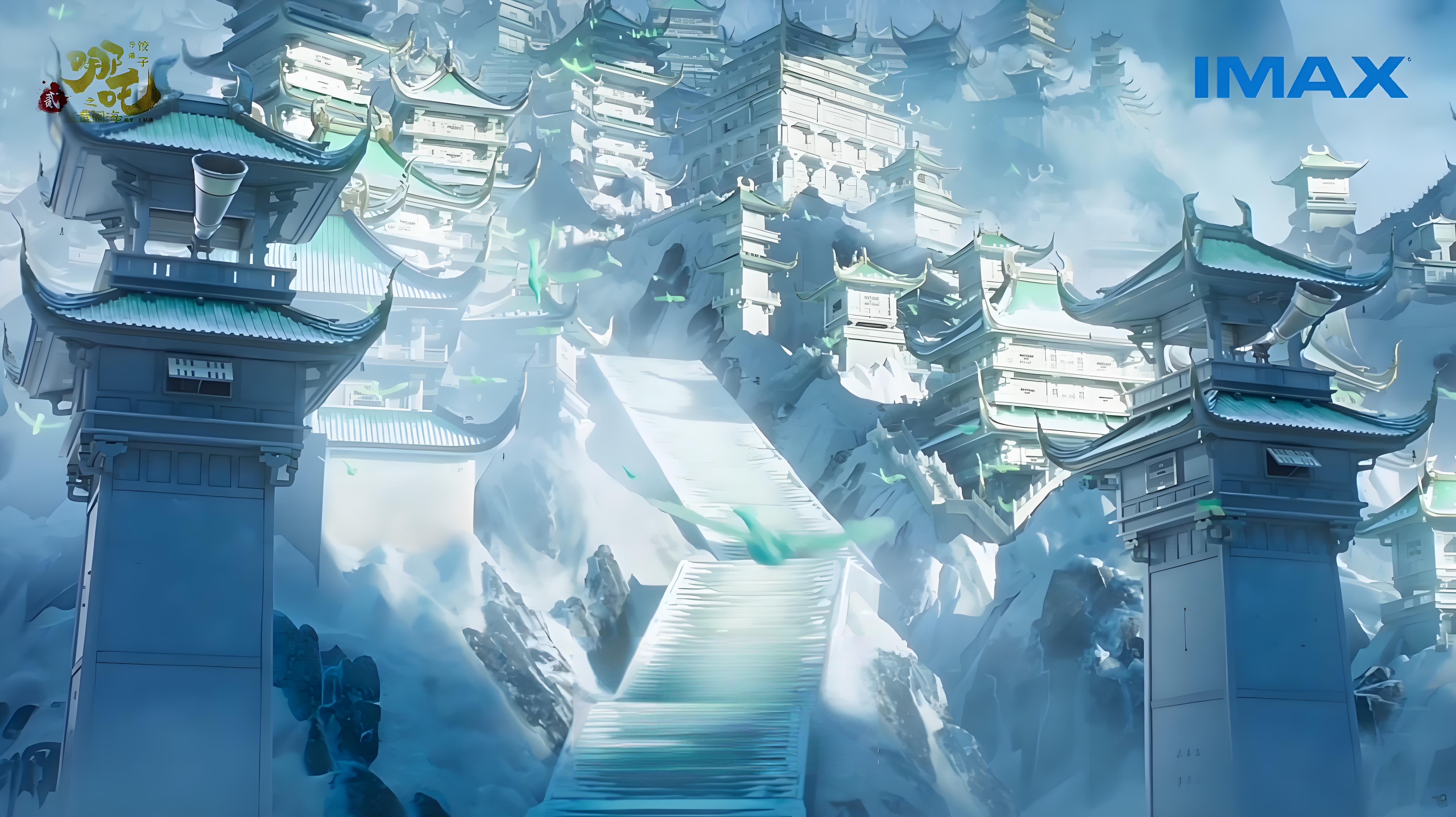
In fact, one of my favorite scenes of the film found its roots in a traditional Chinese painting. When I saw the vast sea of jade birds flying above the royal palace and tinkling beautifully, I was entranced. The design of the roof on which the birds perched is a direct reference to a painting by Emperor Huizong of the Song Dynasty. Though I didn’t know the exact inspiration when I watched the film, this brief moment of whimsical, charming world-building fueled my curiosity for where the film could take me next.
The most prominent theme of the film, since its first installment, is “我命由我不由天,” which translates to “I am the master of my own destiny.” Though many cultures can relate to this sentiment, it is one of the core pillars of Taoism. The adage embodies optimism, resilience, and freedom. This quote re-surged in popularity after appearing in the first Ne Zha film, as people around China saw themselves and their aspirations in this iconic line.
燃 (Rán) - A Spirit Not Lost
Every year, China comes out with “main melody” films. “Main melody” films refer to movies that promote government core values and ideology to all generations with the goal of evoking patriotism. Popular topics center around historical moments (e.g., the Revolution), natural disasters, personal struggles, ancient Chinese civilizations, and more. When you watch these films, you’re supposed to feel “燃”, which refers to immense pride, passion, and inspiration.
Though many “main melody” films have been entertaining and commercially successful, they have become stale to some audiences. Often doused in preachy tones with epic music and grand heroic moments, these films no longer appeal to audiences that are too sophisticated to be wooed by on-the-nose dramatic narratives. While the genre itself is still popular, its films are not living up to expectations.
Ne Zha 2 is not a “main melody” film, but the narrative surrounding the film is nothing but uplifting and inspiring. The film is an exemplification of “show not tell,” conveying a patriotic message with power and grandeur.
Ne Zha 2 is authentically “made in China.” 4,000 Chinese animators from over 100 production studios contributed to the stunning animation of this film. You might be wondering—so what?
To put it into perspective, growing up in China, though I did see many wonderful Chinese films, I more often saw Hollywood films dominating my summer breaks and the cultural zeitgeist. Hollywood was the benchmark. Hollywood meant quality: stellar action, dazzling VFX, world-renowned stars, engaging storylines, and the list goes on. The underlying message was always that Chinese films, especially animated films in comparison to work by Disney and Pixar, were still far away from that benchmark.
We are long past that now. Ne Zha showed us what was possible, and Ne Zha 2 only proved it once again. Seeing a mythical character that almost all Chinese people grew up with represented on the big screen in an entertaining and moving way while smashing box office records evokes a strong sense of pride. The film has become a national treasure.
Companies offered free tickets and organized group screenings for employees. People flocked to theaters for their second or third viewing. For Chinese people living abroad, even if they are not sold by the patriotic pride, they have heard about the film from a friend or family member. It is a cultural event beyond the film itself, not dissimilar to how audiences showed up for “Barbenheimer.” It’s a moment you don’t want to miss.
Closing Thoughts
I often feel fortunate to be a part of one of the largest diasporas in the world. There’s a chance to find a trace of home everywhere, whether it’s a concentrated community or a singular Chinese-owned business in the corner of a small town. And when there is a Chinese box office hit, Chinese people everywhere will show up to the theaters and find some semblance of community in the collective viewing.
What I’ve found over the years is that it is important to adjust expectations when you consume content from another country. Rarely does a foreign show or movie follow the norms of an American storytelling style or tone. When you watch Kdramas, you see the romantic leads reunite in slow motion under the first snow in Seoul. When you watch anime, you hear the inner thoughts of the protagonist. Neither is common in American conventions, but both are impactful storytelling techniques. The quirks of these genres do not make them unworthy of your time and critical appreciation.
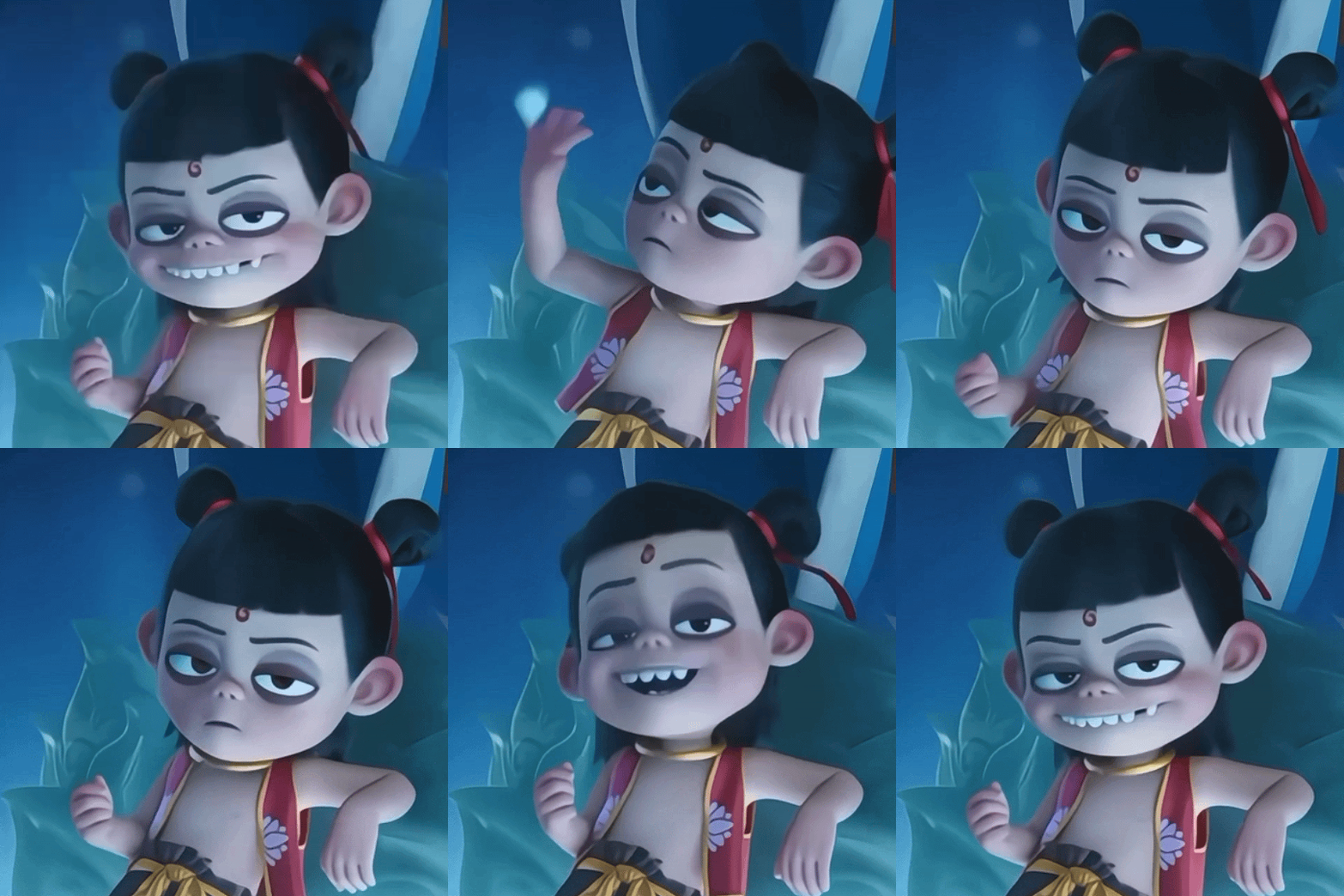
I hope you will enjoy Ne Zha 2 with an open mind. Let it entertain and move you.